
Table of Contents
ToggleIn a world where staying connected is as vital as breathing, wireless networking technology has emerged as the superhero of internet connectivity. Imagine zipping through the digital realm without the hassle of tangled cords or the fear of tripping over a rogue Ethernet cable—sounds like a dream, right? Well, welcome to the age of radio waves, where internet signals ride the invisible highways of the air.
With the flick of a switch, radio waves transform everyday spaces into seamless online experiences. From streaming cat videos to conquering virtual worlds, this technology makes it all possible. So, grab your favorite device and get ready to explore how these magical waves are revolutionizing the way we connect, communicate, and binge-watch our favorite shows—all while keeping our homes free of clutter.
Overview of Wireless Networking Technology
Wireless networking technology uses radio waves to transport internet signals, allowing devices to communicate without physical connections. This technology employs various standards, including Wi-Fi and Bluetooth, each designed for specific applications and settings.
Wi-Fi networks typically operate on 2.4 GHz and 5 GHz frequency bands, facilitating high-speed internet access over considerable distances. Bluetooth, on the other hand, focuses on short-range connections, such as pairing devices like speakers and headphones.
Advancements in wireless technologies enhance signal range and reliability. For instance, MIMO (Multiple Input Multiple Output) techniques improve data transmission by utilizing multiple antennas at both the transmitter and receiver ends. These innovations lead to faster streaming and reduced latency for users.
The adoption of mesh networking systems further enhances coverage in larger spaces. Such systems consist of multiple nodes that work together to extend the network range and eliminate dead zones. Users experience more consistent connectivity throughout homes and offices.
Security remains a critical aspect of wireless networking. Protocols like WPA3 offer improved encryption methods, safeguarding data while in transit. As more devices connect to networks, implementing robust security measures becomes increasingly essential.
Impact on daily life represents a significant consideration. Wireless networking empowers smart home devices, remote work capabilities, and online gaming experiences. Through seamless connections, users participate in activities previously constrained by cumbersome cables.
Understanding wireless networking technology highlights the crucial role of radio waves in contemporary communications. This technology also serves as a cornerstone for innovations that continue transforming how individuals connect and interact in various environments.
Understanding Radio Waves
Radio waves play a crucial role in wireless networking technology by transporting internet signals effectively. This section explores the definition, properties, and functionality of radio waves.
Definition and Properties
Radio waves consist of electromagnetic radiation with specific characteristics. Frequencies generally range from 3 kHz to 300 GHz. These waves exhibit various properties, including amplitude, wavelength, and frequency. Amplitude relates to signal strength, whereas wavelength defines the distance between wave peaks. Long wavelengths can travel further, making them ideal for long-range communication. Additionally, radio waves can penetrate objects, facilitating vibrant connectivity within homes and offices.
How Radio Waves Carry Signals
Radio waves transmit data by modulating their frequencies and amplitudes. This modulation involves altering wave characteristics to encode information. The encoded signals travel through the air, reaching devices like smartphones and routers. Wireless communication protocols, such as Wi-Fi and Bluetooth, utilize specific frequencies to allocate bandwidth effectively. For instance, Wi-Fi operates primarily at 2.4 GHz and 5 GHz. As radio waves propagate, they encounter obstacles, which can weaken the signals. Nevertheless, sophisticated technologies like MIMO overcome interference and enhance data transfer rates, ensuring a smooth online experience.
Types of Wireless Networking Technologies
Wireless networking technologies encompass various methods for transmitting data without physical connections. These technologies leverage radio waves, ensuring flexibility and convenience across numerous applications.
Wi-Fi Standards
Wi-Fi standards include a range of protocols that govern wireless local area networks (WLAN). The IEEE 802.11 family defines these standards, with 802.11n, 802.11ac, and 802.11ax being the most prevalent. Operating on 2.4 GHz and 5 GHz bands, they deliver different ranges and speeds. Specifically, 802.11ac offers higher data rates, while 802.11ax, also known as Wi-Fi 6, enhances efficiency in dense environments. Many households and businesses rely on Wi-Fi technology for high-speed internet access and seamless connectivity among multiple devices.
Cellular Networks
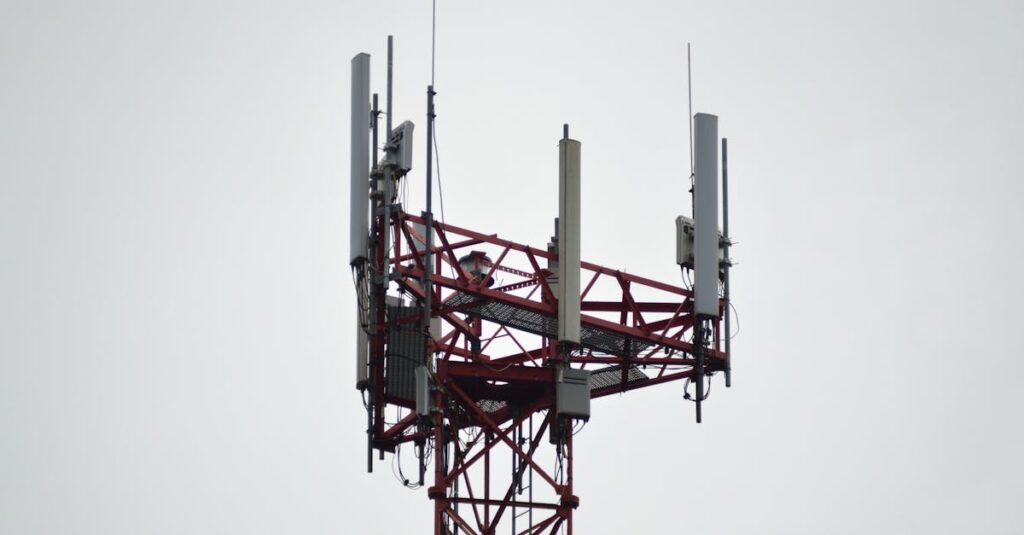
Cellular networks facilitate mobile communication by segmenting geographical areas into cells. Each cell connects to a central hub, known as a base station, allowing users to access voice and data services. Technologies such as 4G LTE and 5G play critical roles in this ecosystem, offering significantly faster data transfer rates and lower latency. While 4G supports streaming and browsing, 5G introduces innovations like enhanced mobile broadband and massive IoT connectivity. As mobile usage increases, cellular networks provide essential infrastructure for on-the-go users.
Bluetooth Technology
Bluetooth technology enables short-range wireless communication between devices. Typically operating at frequencies around 2.4 GHz, Bluetooth allows for the connection of peripherals like headphones, mice, and keyboards. Standard protocols include Bluetooth Classic and Bluetooth Low Energy (BLE), with BLE optimized for energy efficiency in devices like wearables and smart home gadgets. Many users benefit from Bluetooth’s ability to establish quick connections without the need for pairing wires. This technology underscores convenience in personal and professional environments by ensuring seamless device interaction.
Benefits of Wireless Networking Technology
Wireless networking technology offers several advantages that enhance internet connectivity and user experience.
Increased Mobility
Increased mobility is a key benefit of wireless networking. Users can connect devices without being tethered to cables. Laptops and smartphones enable seamless movement within homes and offices. Wireless connections allow people to work or stream content from virtually any location. Flexibility in usage contributes to greater productivity. Increased mobility fosters collaboration, as teams can communicate more effectively without physical barriers. Businesses that adopt wireless solutions often see improved employee satisfaction.
Cost-Effectiveness
Cost-effectiveness is another significant advantage. Wireless networking reduces the need for extensive cabling and infrastructure. Initial setup and maintenance costs often decrease when using wireless technologies. Remote workplaces benefit from lower operational expenses related to networking equipment. Businesses also save on long-term expenses associated with hardware upgrades. In many cases, existing devices can support the latest wireless standards, further minimizing costs. Overall, companies that leverage wireless networking can allocate resources more effectively.
Scalability and Flexibility
Scalability and flexibility are critical for modern networking needs. Wireless networks can easily adapt to changing demands. Adding new devices often requires minimal effort, allowing businesses to expand their operations. Adapting to various environments and requirements becomes straightforward with wireless technology. Small offices and large enterprises alike find scalability advantageous. This flexibility ensures that network performance remains consistent as user needs evolve. Moreover, organizations can implement changes without overhauling their entire infrastructure.
Challenges and Limitations
Wireless networking technology presents several challenges and limitations that impact performance and security.
Signal Interference
Signal interference poses a significant challenge in wireless networking. Various devices, appliances, and physical obstacles can disrupt radio waves. Common sources of interference include microwaves, cordless phones, and even thick walls. Overlapping networks may lead to congestion in frequency bands, reducing overall speed. Deploying devices using dual-band routers can mitigate some interference, allowing for better performance in busy environments. Regularly scanning for optimal channels also enhances connection quality. In larger spaces, utilizing mesh networks can help overcome dead zones caused by interference and other barriers.
Security Concerns
Security concerns remain a major limitation in wireless networking. Despite advancements like WPA3 encryption, vulnerabilities still exist. Unauthorized access to unsecured networks compromises sensitive data. Phishing attempts through Wi-Fi networks expose users to potential threats. Regular updates to router firmware can help protect against vulnerabilities. The implementation of strong passwords and network privacy settings significantly reduces risk. Education on recognizing insecure networks empowers users to make safer choices when connecting to the internet.
The Future of Wireless Networking Technology
Emerging advancements in wireless networking technology promise to reshape connectivity. Innovations in 5G networks enhance data transfer rates, supporting the increasing demand for high-speed internet access. High-frequency bands facilitate faster and more reliable connections, granting users seamless online experiences.
Developments in Wi-Fi 6 technology optimize performance in crowded environments. Increased capacity supports more devices simultaneously without compromising speed, making it ideal for smart homes and businesses. MIMO technology expands capabilities by using multiple antennas to boost data transmission, proving critical in densely populated areas.
Interconnected devices will dominate future wireless networking systems. IoT devices underscore how radio waves facilitate communication among smart appliances, wearables, and other technologies. This expansion fosters interoperability, leading to smarter homes and more efficient businesses.
Security solutions will continue evolving alongside wireless advancements. As cyber threats escalate, newer encryption methods and security protocols will protect sensitive data. WPA3 will maintain its importance, while innovative strategies will emerge to defend networks against unauthorized access.
Adoption of mesh networking will rise, effectively improving coverage. Multiple nodes will address dead zones in larger spaces, ensuring consistent internet access. Flexibility in deploying these systems highlights future adaptation to growing connectivity needs.
Challenges will persist, including signal interference and bandwidth limitations. Fine-tuning frequency bands and employing advanced technology will mitigate these issues, enhancing user experience. Understanding these advances and challenges will lay the groundwork for wireless networking technology that continuously transforms how individuals connect and interact.
Wireless networking technology is reshaping the way individuals and businesses connect. By utilizing radio waves for internet signal transportation, it offers unmatched convenience and flexibility. This technology not only enhances mobility but also fosters innovation in smart devices and remote work capabilities.
As advancements continue to emerge, the importance of robust security measures cannot be overstated. Staying informed about evolving standards and potential challenges ensures users can maximize the benefits of wireless networking. With its ability to transform communication and entertainment, wireless technology stands as a vital component of modern connectivity.