
In today’s tech-savvy world, a reliable home network is as essential as coffee on a Monday morning. Enter the home network switch—the unsung hero of your digital domain. This nifty device connects multiple devices to your network, ensuring that everyone can binge-watch their favorite shows without buffering or argue over who hogs the Wi-Fi.
Imagine a world where your smart fridge, gaming console, and laptop all communicate seamlessly, like a well-rehearsed dance troupe. A home network switch makes that dream a reality, transforming your internet experience from a chaotic mess into a smooth operation. So, if you’re tired of slow connections and endless complaints about lag, it’s time to embrace the switch and upgrade your home network game. After all, who wouldn’t want to be the tech-savvy hero of their household?
Overview of Home Network Switch
A home network switch connects multiple devices within a home network, facilitating communication and data transfer among them. With ports for connecting various devices, switches accommodate Ethernet connections for computers, smart TVs, and printers. Each connected device communicates with each other through the switch, enabling efficient data management.
Performance relies heavily on the type of switch chosen. Unmanaged switches offer plug-and-play simplicity, making them ideal for straightforward setups. Managed switches add advanced options such as monitoring traffic and configuring settings, providing flexibility for larger networks. Features like VLAN support further enhance performance by segmenting network traffic for optimized efficiency.
Switches also enhance bandwidth, minimizing latency and buffering. By allowing multiple devices to operate simultaneously without degrading performance, a switch enhances the overall user experience. For households with various devices, including gaming consoles and smart home appliances, this increased connectivity is essential.
Choosing the right switch depends on specific needs. Home users with basic requirements often choose unmanaged switches, while tech-savvy individuals opt for managed switches to take full control of their network. Additionally, power over Ethernet (PoE) capabilities in some switches enable device charging or powering through the same cable, reducing clutter and simplifying installations.
Ultimately, integrating a home network switch can transform a household’s internet experience. With improved connectivity, families simplify their digital lives while ensuring reliable performance across all devices. Investing in a quality switch provides the foundation for a fast, efficient, and robust home network setup.
Types of Home Network Switches
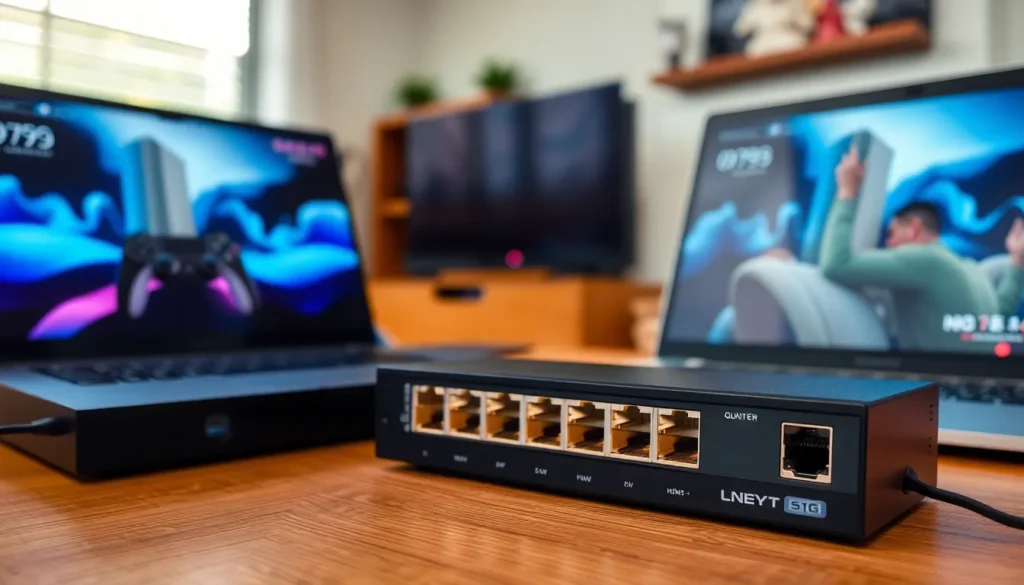
Home network switches fall into two main categories: unmanaged and managed switches. Each type caters to different needs and setups, making it important to choose wisely.
Unmanaged Switches
Unmanaged switches offer a straightforward solution for simple home networks. They function right out of the box, allowing multiple devices to connect without any configuration. Typically, these switches support plug-and-play functionality. With a limited number of ports, unmanaged switches work well in smaller households. They excel in supporting devices such as smart TVs, gaming consoles, and laptops. Cost-effectiveness becomes a significant advantage, as these switches often come in at a lower price point. Enjoying reliable connectivity is assured, but advanced features remain absent.
Managed Switches
Managed switches provide a higher level of control over network performance. These switches allow users to configure settings based on specific requirements. Robust features like network monitoring and VLAN support enhance flexibility. Larger households benefit from the ability to prioritize bandwidth allocation. Security improvements exist, with options for configuring user permissions and monitoring traffic. Although the cost is higher, managed switches provide value for homes with multiple high-demand devices. Increased stability and network efficiency ensure a better internet experience for everyone.
Key Features to Consider
When selecting a home network switch, several key features play a significant role in performance and functionality. Understanding these features enhances users’ overall network experience.
Port Count
Port count directly impacts the number of devices a switch can connect. Generally, switches are available with 5, 8, 16, or more ports. A higher port count serves households with multiple internet-enabled devices. For example, households with smart TVs, laptops, and gaming consoles might require switches with 16 or more ports. Choosing a switch with an adequate number of ports ensures seamless connectivity and future-proofing as new devices are added. It’s important to assess current and potential future needs when selecting the right port count.
Data Transfer Rates
Data transfer rates determine the speed at which information flows between devices. Switches commonly operate at specific speeds, such as 1 Gbps or 10 Gbps. Higher data transfer rates effectively reduce latency during heavy usage, especially when multiple devices stream content or engage in online gaming simultaneously. An optimal switch can maximize network efficiency and maintain fast connections across devices. Users should ensure their selected switch aligns with their internet plan for the best overall performance.
Power over Ethernet (PoE) Support
Power over Ethernet (PoE) support simplifies device installations by delivering power and data through a single cable. Devices like IP cameras and access points benefit significantly from PoE capabilities. This feature reduces cable clutter and installation time, making network setups cleaner and more efficient. Ensure the selected switch has adequate PoE ports to support all relevant devices. Choosing a switch with PoE can enhance network flexibility and efficiency for smart homes, streamlining installation and power management.
Benefits of Using a Home Network Switch
Using a home network switch greatly enhances connectivity among various devices. Improved bandwidth availability supports seamless streaming, gaming, and multitasking applications. Reduced latency enables smoother performance by minimizing delays, especially for high-demand activities.
Enhanced security features in managed switches provide additional safeguards for sensitive data. Power over Ethernet capabilities streamline installations for devices needing power, reducing the number of cables required. A switch’s ability to connect multiple devices simultaneously eliminates bottlenecks and maintains efficient communication paths.
Network monitoring options in managed switches allow users to analyze and optimize performance. Plug-and-play simplicity of unmanaged switches offers a straightforward solution for basic setups, making them accessible for non-tech-savvy users. Scalability ensures that households can expand their network connectivity as needed, accommodating future devices and upgrades.
Simplicity in setup and maintenance ensures that users can focus more on their technology rather than on troubleshooting network issues. Cost-effectiveness comes into play, as these switches provide significant long-term savings by enhancing overall network efficiency. Increased reliability leads to fewer disruptions, allowing families to enjoy uninterrupted internet connection during important tasks.
Overall, integrating a home network switch transforms the home digital landscape. With increased functionality and efficiency, a home network switch serves as a vital tool for modern households. Adapting these devices fosters a superior internet experience, elevating overall satisfaction with home networking.
Upgrading to a home network switch can significantly elevate the internet experience for any household. By enhancing connectivity and enabling seamless communication between devices, it addresses common issues like buffering and lag. Whether opting for an unmanaged switch for simplicity or a managed switch for advanced features, the right choice can cater to specific needs.
Investing in a quality switch not only boosts bandwidth but also prepares homes for future technological demands. With improved performance and efficiency, families can enjoy smoother streaming, gaming, and overall online activities. Embracing this technology transforms a standard home network into a robust system that meets the demands of modern living.