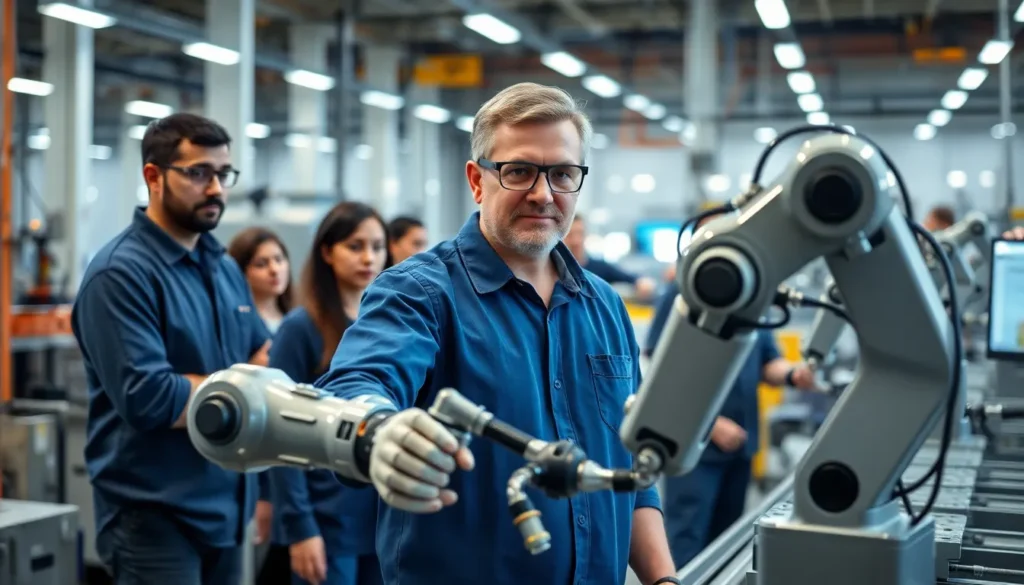

In a world where robots might soon take over the dance floor, the manufacturing sector is already feeling the groove of artificial intelligence. From assembly lines to quality control, AI is transforming how products are made, making processes faster and more efficient than ever. Imagine machines that not only work tirelessly but also learn and adapt—it’s like having a super-smart buddy who never takes coffee breaks.
Overview of AI in Manufacturing
AI significantly transforms the manufacturing industry by optimizing various processes. Companies integrate AI technologies for predictive maintenance, resulting in reduced downtime and lower operational costs. Advanced algorithms analyze machine data in real-time, allowing manufacturers to anticipate failures before they occur.
Quality control benefits from AI through automated inspection systems. These systems utilize image recognition and machine learning to detect defects more accurately than traditional methods. As a result, production quality improves consistently, leading to enhanced customer satisfaction.
Supply chain management experiences efficiency gains thanks to AI solutions. Algorithms forecast demand, streamline inventory management, and manage logistics, resulting in reduced waste and improved delivery times. Manufacturers using AI-driven insights achieve better synchronization across their supply chains.
Robots equipped with AI capabilities assist in various tasks. They perform repetitive assembly jobs and handle hazardous materials, enhancing workplace safety. This collaboration between humans and machines creates a synergistic environment that boosts productivity.
The integration of AI in manufacturing often leads to smarter resource allocation. AI systems analyze production trends, enabling manufacturers to allocate resources more effectively. Consequently, this optimization results in increased output and cost savings.
Data analytics plays a pivotal role in AI applications. Manufacturers harness data to identify operational inefficiencies and make informed decisions. By leveraging analytics, companies position themselves to adapt to market changes swiftly and maintain competitive advantages.
Benefits of AI in Manufacturing
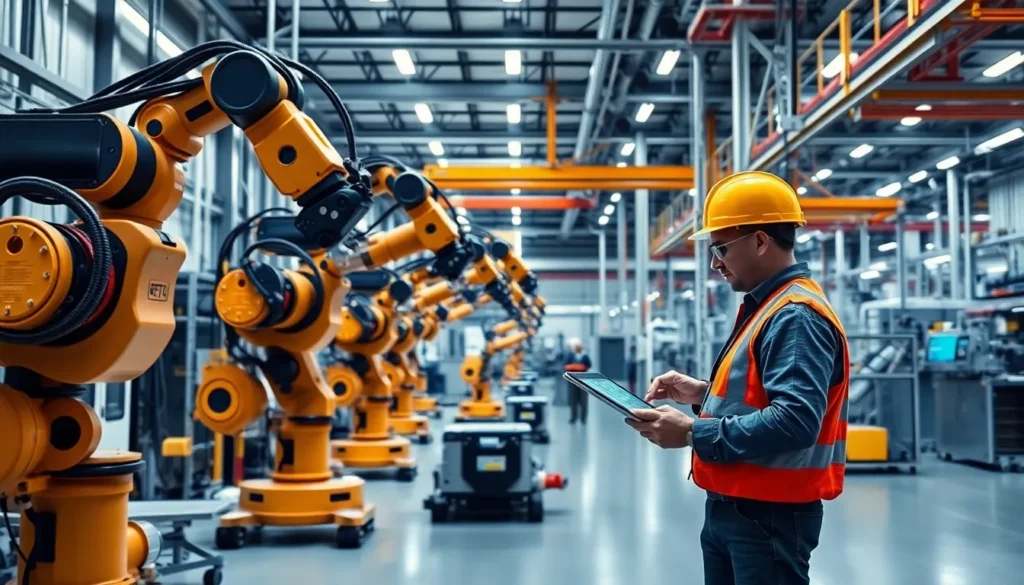
AI in manufacturing brings several key advantages that transform production dynamics. These benefits encompass increased efficiency, enhanced quality control, and smarter resource allocation.
Increased Efficiency
AI streamlines manufacturing processes by automating repetitive tasks. Automation reduces human error and minimizes delays, resulting in faster production cycles. Predictive maintenance tools analyze real-time machine data to foresee potential failures, significantly cutting unplanned downtime. Data-driven insights enable manufacturers to optimize workflows, so they can allocate resources more effectively. Consequently, AI-driven systems increase output and reduce energy consumption, translating to substantial cost savings over time.
Enhanced Quality Control
Quality control improves dramatically with AI interventions. Automated inspection systems employ advanced image recognition technologies to identify defects more accurately than human inspectors. Consistency in quality assessments leads to fewer production errors and greater customer satisfaction. AI algorithms also analyze production data to detect patterns related to quality issues, facilitating proactive measures to maintain standards. Overall, integrating AI enhances product reliability, fosters trust among consumers, and boosts brand reputation.
Challenges of Implementing AI
Implementing AI in manufacturing comes with significant challenges that require careful consideration. These obstacles can hinder the smooth integration of advanced technologies into established processes.
High Initial Costs
High initial costs present a considerable barrier to adopting AI technologies. Investments in advanced machinery, software, and infrastructure can reach millions of dollars. Companies might face difficulties justifying these expenditures, especially if immediate returns on investment are not evident. Financial burdens can deter smaller manufacturers from pursuing AI solutions. To successfully navigate these costs, businesses often explore financing options or partnerships with AI vendors offering shared investment models. Companies emphasizing long-term benefits, such as operational efficiency and reduced labor costs, may gain better insight into the overall value of AI investments.
Integration with Existing Systems
Integration with existing systems proves challenging for many manufacturers. Legacy systems may not support the new AI applications, leading to compatibility issues. Resistance from employees can also delay the transition, as staff members may fear job displacement or require retraining. Effective change management strategies become crucial in overcoming this resistance. Manufacturers benefit from gradual integration approaches, allowing them to test AI functionalities alongside their current operations. Ensuring seamless communication between AI systems and traditional technologies enhances data flow and operational efficiency. Prioritizing interoperability across systems helps facilitate a smoother transition, ultimately contributing to a more cohesive manufacturing environment.
Future Trends in AI for Manufacturing
Innovations in artificial intelligence are poised to shape the future of manufacturing, driving improvements and efficiency in various processes.
Predictive Maintenance
Predictive maintenance emerges as a key trend in manufacturing, offering significant advantages. Advanced algorithms facilitate real-time analysis of machinery, allowing identification of potential failures before they occur. By anticipating issues, manufacturers minimize downtime while cutting operational costs. This proactive approach leads to increased machine lifespan and reduces the need for costly repairs. Companies utilizing predictive maintenance see tangible benefits in productivity and efficiency, ultimately enhancing their bottom line.
Smart Factories
Smart factories represent the next frontier in manufacturing, leveraging AI and Internet of Things (IoT) technologies. Automation systems enable seamless communication between machines, optimizing workflows and resource allocation. Enhanced data analytics empower manufacturers to refine processes continually, resulting in smarter decision-making. With real-time monitoring, manufacturers can quickly identify and address inefficiencies, ensuring consistent production quality. Embracing smart factory concepts not only boosts efficiency but also positions manufacturers for future growth and competitiveness.
AI’s role in manufacturing is undeniably transformative. By enhancing efficiency and quality control it paves the way for smarter production processes. The ability to predict maintenance needs and optimize resource allocation not only reduces costs but also boosts output.
As manufacturers continue to embrace AI technologies they position themselves for a competitive edge in an ever-evolving market. Navigating the challenges of implementation is crucial for success. With the right strategies in place companies can fully harness the power of AI and drive innovation in their operations.
The future of manufacturing is bright with AI at the helm guiding the industry toward greater reliability and efficiency.