

In a world where buffering feels like a form of medieval torture, dual-band routers swoop in like tech-savvy superheroes. They offer not just one but two frequencies, making sure your streaming, gaming, and browsing experience is smoother than a cat on a freshly waxed floor. Who wouldn’t want to kick lag to the curb and enjoy seamless connectivity?
Imagine juggling multiple devices while still having the speed of a cheetah on espresso. With a dual-band router, that dream becomes a reality. It cleverly separates your devices onto 2.4GHz and 5GHz bands, ensuring everyone in the household can enjoy their online activities without stepping on each other’s toes. So, whether it’s binge-watching the latest series or conquering virtual worlds, a dual-band router is the trusty sidekick you didn’t know you needed.
Overview of Dual-Band Routers
Dual-band routers operate on two frequency bands: 2.4GHz and 5GHz. Each band has distinct advantages, enhancing user experiences across various activities. The 2.4GHz band provides broader coverage, effectively penetrating walls and obstacles. This band excels in connecting older devices and offers sufficient range for standard internet use.
In contrast, the 5GHz band offers faster speeds and reduced interference. Many modern devices connect seamlessly to this band, making it ideal for activities like HD streaming and online gaming. Users often enjoy smoother performance when using multiple devices simultaneously on this frequency.
Several features contribute to the utility of dual-band routers. Quality of Service (QoS) settings prioritize bandwidth allocation, ensuring essential applications receive the necessary speed. Dual-band technology also supports dual WAN connections, allowing enhanced load balancing for better performance.
Security features bolster the functionality of dual-band routers. They often come equipped with WPA3 encryption, which provides improved security for connected devices. The ability to separate guest networks enhances security further, allowing visitors to access the internet without compromising the main network.
User control plays a vital role in the effectiveness of dual-band routers. Many routers offer intuitive interfaces for managing device connections, monitoring usage, and adjusting settings. This control enables users to optimize their network according to their unique requirements.
With dual-band routers, households benefit from reliable internet connections. Multiple devices can operate concurrently without sacrificing performance. At the same time, users experience fewer disruptions during online activities.
Benefits of Using Dual-Band Routers
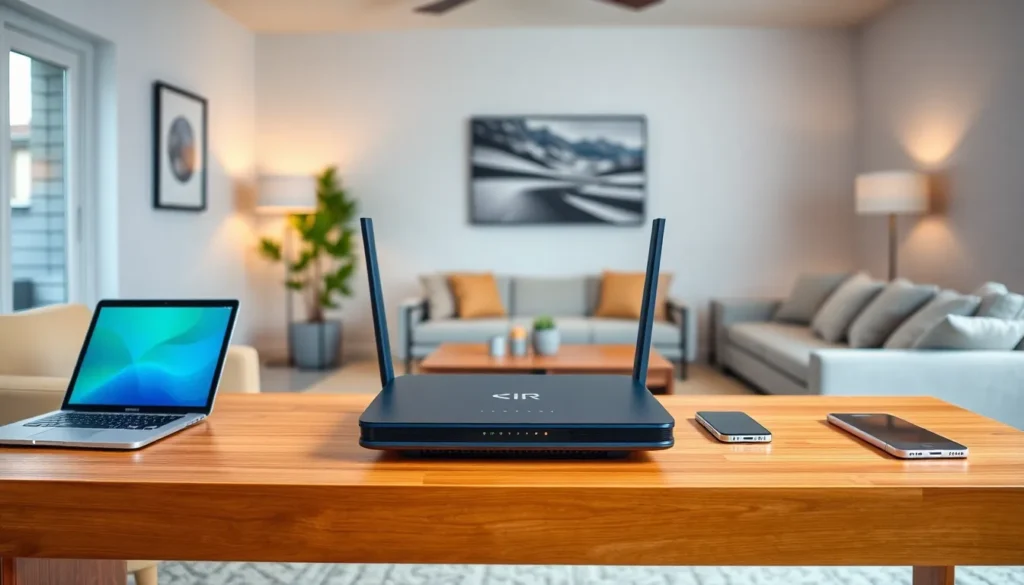
Dual-band routers offer significant advantages for users, especially in homes with multiple devices. With both 2.4GHz and 5GHz bands, these routers deliver tailored connectivity experiences.
Faster Speeds
Speed optimization is a key benefit of dual-band routers. The 5GHz band operates at higher frequencies, providing faster data rates of up to 1,300 Mbps compared to the 2.4GHz band, which typically offers rates around 450 Mbps. Many devices and users experience smoother streaming and quicker downloads when connected to this band. For example, HD and 4K streaming services benefit greatly from the increased bandwidth, minimizing buffering and latency. Additionally, online gaming achieves better performance, creating a responsive environment essential for competitive play. Devices that support dual-band technology enjoy enhanced speed, making activities more efficient and enjoyable.
Reduced Interference
Dual-band routers effectively minimize interference, enhancing overall connectivity. The 2.4GHz band is more crowded due to common household devices like microwaves and cordless phones. In contrast, the 5GHz band faces less congestion, resulting in cleaner data transmission. Users often notice a significant reduction in lag when multiple devices connect simultaneously. In urban areas where several Wi-Fi networks overlap, this dual-band capability becomes especially important. By switching to the 5GHz band, many households experience improved reliability and stability in their connections. Enhanced signal quality allows users to enjoy seamless online activities regardless of surrounding electronic interference.
Key Features to Consider
Dual-band routers offer several key features that enhance connectivity and overall user experience. Understanding these features helps in selecting the right device for various internet needs.
Frequency Bands
Dual-band routers operate on two frequency bands: 2.4GHz and 5GHz. The 2.4GHz band provides broader coverage, making it effective for devices that require a stable connection across longer distances. This band effectively penetrates walls, thus benefiting older devices and regular internet tasks. The 5GHz band offers faster speeds, reaching up to 1,300 Mbps, which supports HD streaming and online gaming. Users find reduced interference on the 5GHz band, resulting in a more reliable connection, particularly in environments with multiple overlapping Wi-Fi networks.
Number of Antennas
The number of antennas on a dual-band router significantly impacts performance. More antennas contribute to better signal strength and improved coverage. Many routers feature multiple antennas that use MIMO (Multiple Input Multiple Output) technology, allowing them to handle several connections simultaneously. This is essential in households with numerous devices. Enhanced antenna configurations reduce dead zones, ensuring consistent connectivity throughout the home. Additionally, routers with adjustable antennas allow users to optimize coverage according to their unique home layout.
Top Dual-Band Routers on the Market
Several dual-band routers currently lead the market, each offering unique features that cater to various needs.
Router A Review
Router A stands out for its exceptional speed capabilities. With a maximum throughput of up to 1,200 Mbps on the 5GHz band, it excels in HD streaming and online gaming. Equipped with four antennas, the device ensures strong signal strength across large homes. Its advanced QoS settings prioritize bandwidth for devices needing it most. Moreover, the easy-to-use interface allows users to manage their network effortlessly. Security features include WPA3 encryption and guest network access, providing peace of mind for users. This router represents a strong option for those seeking reliable performance.
Router B Review
Router B offers robust performance, featuring dual-band functionality with speeds reaching 1,300 Mbps. Ideal for households with multiple devices, it effectively reduces lag during active use. Utilizing six antennas, it enhances coverage, tackling dead zones head-on. Users praise its seamless setup process, allowing for quick installation. This router includes robust security measures, such as WPA3 encryption and automatic firmware updates, ensuring continued protection from threats. Its blend of speed and security makes Router B a popular choice for tech-savvy households.
Dual-band routers stand out as essential tools for modern households seeking reliable internet connectivity. By leveraging both the 2.4GHz and 5GHz bands, these routers cater to diverse needs ranging from casual browsing to intensive gaming. Their advanced features enhance user experience by prioritizing bandwidth and ensuring robust security.
With options like multiple antennas and MIMO technology, dual-band routers effectively eliminate dead zones and provide consistent coverage. As more devices connect to home networks, the importance of a dual-band router becomes increasingly clear. Investing in one not only streamlines internet activity but also future-proofs home connectivity for years to come.